Transcribana
VTT generator
Generate a WebVTT file for a web-video caption track from your audio or video recording.
Start transcribingStart transcribing
Best supported on current desktop Chrome. Codec support, speed and memory vary by browser and device. Mobile transcription is not guaranteed.
Drop an audio or video file here
Interviews, meetings, lectures, and everything worth keeping.
Audio and video files are processed locally in your browser.
Supported file formats
MP3, WAV, M4A, AAC, FLAC, OGG, OPUS, MP4, MOV, WebM, MKV, M4V and 3GP with supported audio codecs. Files are checked locally. AVI, WMA and MPEG/MPG program streams are not supported. Codec support varies by browser.
Transcription runs locally in your browser. Your audio and video are not uploaded to our servers.
Auto Detect uses the opening audio to choose one spoken language. Accuracy varies by language and recording. Amharic transcription is currently unavailable because it can produce incorrect text. Review every transcript against the recording.
Advanced settings
Models download on first use. A loaded model is reused; change model or processing mode to release it.
Choose a recording to get started.
Progress will appear here.Your words, ready to use.
Document edits apply to copied text and TXT. Subtitles and JSON preserve the original timed transcription.
Processing details
Timestamps are model estimates. Total RAM and GPU memory are not available to this page; use your browser’s task manager.
Arabic uses a dedicated model with about 1.33 GB of weights and CPU/WASM processing. The first run may take several minutes. General model and GPU choices do not change the Arabic model.
Before you start
WebVTT begins with a WEBVTT header and uses a dot before milliseconds. This tool exports plain timed text, not custom regions or advanced cue styling. Check what your player accepts before publishing.
A workflow that fits your file
Transcribe once, open Subtitles and download VTT. For an HTML video player, the file can be connected through a track element by your website developer. This app does not host your video or subtitle file.
Review and use the result
The exported track uses canonical segments, independent of readable-text edits. Review direction and punctuation for Arabic in the final player, and verify all timestamps against playback.
WebVTT for a web video track
A VTT file begins with WEBVTT and writes milliseconds after a dot. The illustration below shows plain timed text. Transcribana exports those cues from the original recognition segments; it does not author WebVTT styling or regions. The consuming page must attach the file to its video player—downloading VTT does not publish it.
Keep the video and captions on the same edit. Check SRT versus VTT if your editor requests a different file type, and use video transcription for the local media workflow. Review right-to-left text in the actual player when publishing Arabic captions.
WEBVTT

00:00:01.000 --> 00:00:03.500
Hello, Maya.
How it works
Upload
Choose an audio or video recording from your device.
Transcribe
Select the spoken language and let the required model load.
Edit
Review the words against your recording and edit the readable text.
Export
Copy text or download TXT. SRT, VTT and JSON preserve the original timed result.
Your recording never needs to leave your device.
Speech recognition and text checking run locally. The website and model files still need network access. Hosting and model providers can receive ordinary connection information; they do not receive your recording through this tool.
Understand local processingQuestions, answered
Does my recording get uploaded?
No. The browser reads and transcribes it locally. Website assets and model downloads use the network separately.
Can I use it offline?
A model already loaded in an open page can be reused offline. Reloading, switching models or clearing storage may require network access.
Will text corrections change my subtitles?
No. Copy Text and TXT use the selected document version. SRT, VTT and JSON keep the original timed transcription.
Related tools
Generate Subtitles from Audio or Video (SRT & VTT)
Create original-language SRT or WebVTT subtitles from a recording. Review model-estimated timing and export locally without uploading your media.
SRT generator
Create an SRT subtitle file from a recording, using the original transcription and its timestamps.
Useful guides
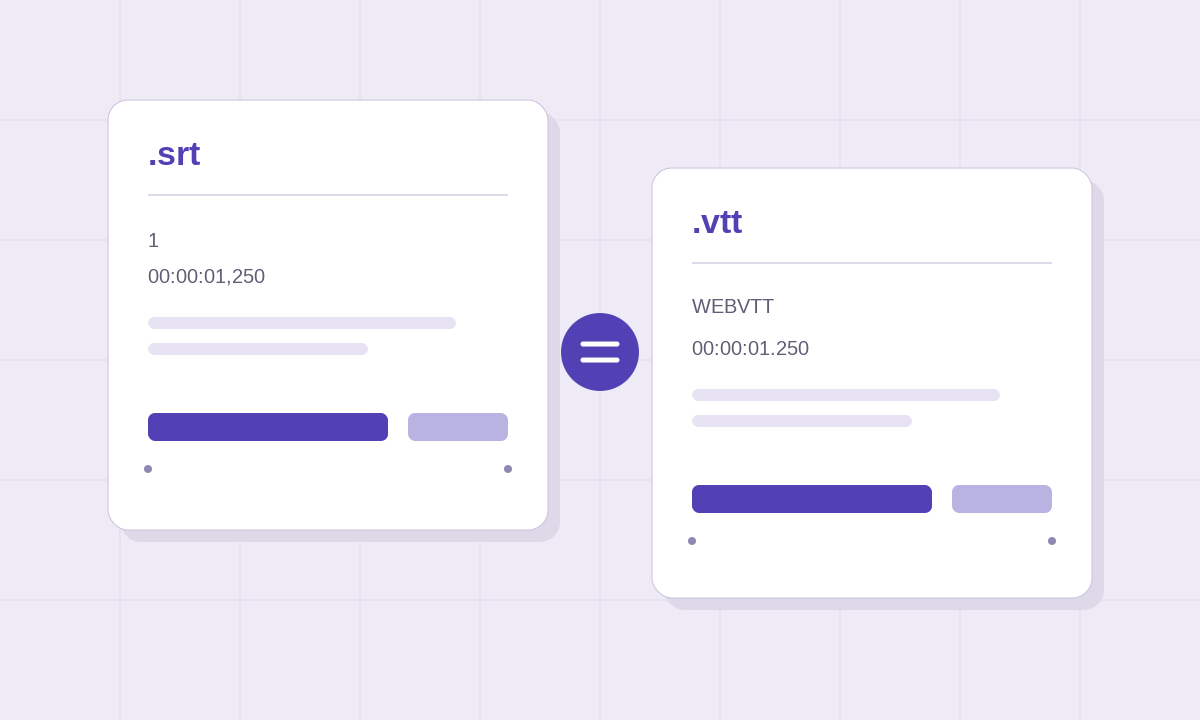
SRT vs VTT: Differences, Examples and Which to Use
Compare SRT and WebVTT with matching examples. Check subtitle syntax, understand Transcribana exports and review common problems before publishing.
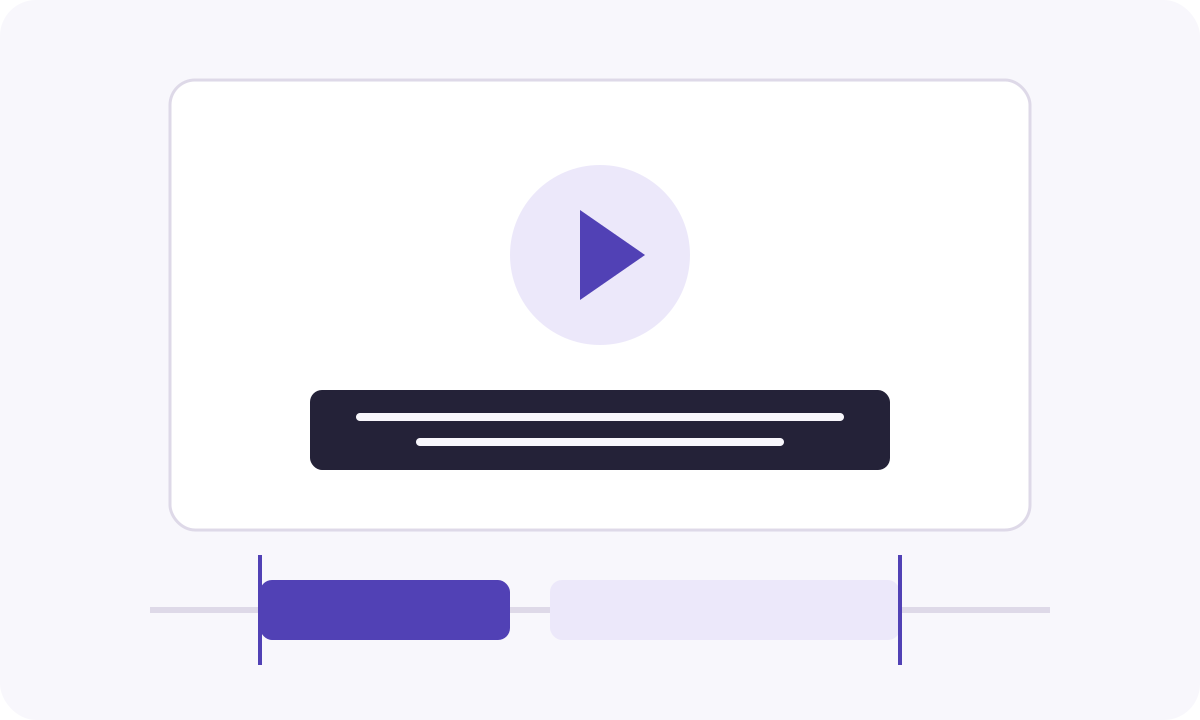
From Automatic Subtitles to Captions People Can Follow
Review words, cue timing, reading effort and meaningful sounds. Understand what an automatic subtitle export provides and what still needs human editing.
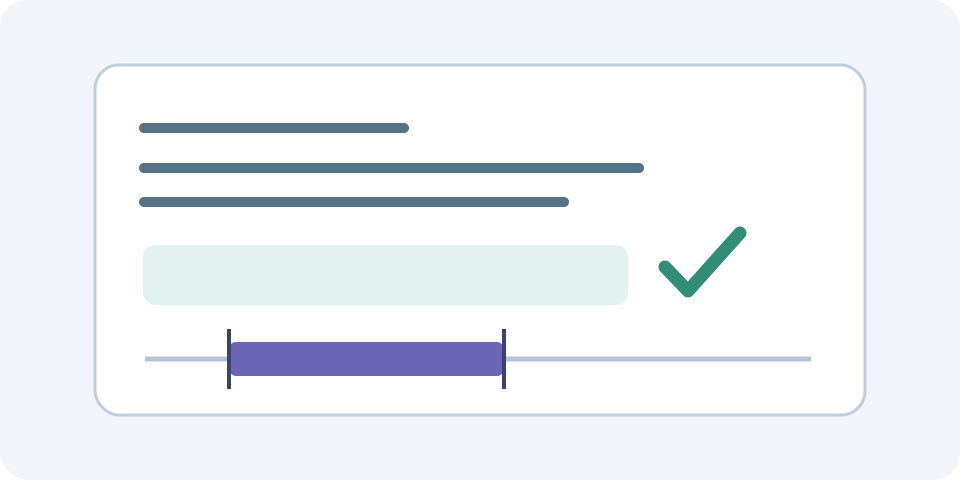
Edit an SRT File Without Losing Its Timing
Review subtitle words and cue boundaries in an external editor, preserve a safe original and test the saved SRT against the exact recording.
Review Translated Subtitles Before Sharing
Check translated subtitle meaning, names, negatives and reading time against the source. Keep reviewed translation separate from the original transcript.
Play SRT Subtitles in VLC: Step-by-Step Guide
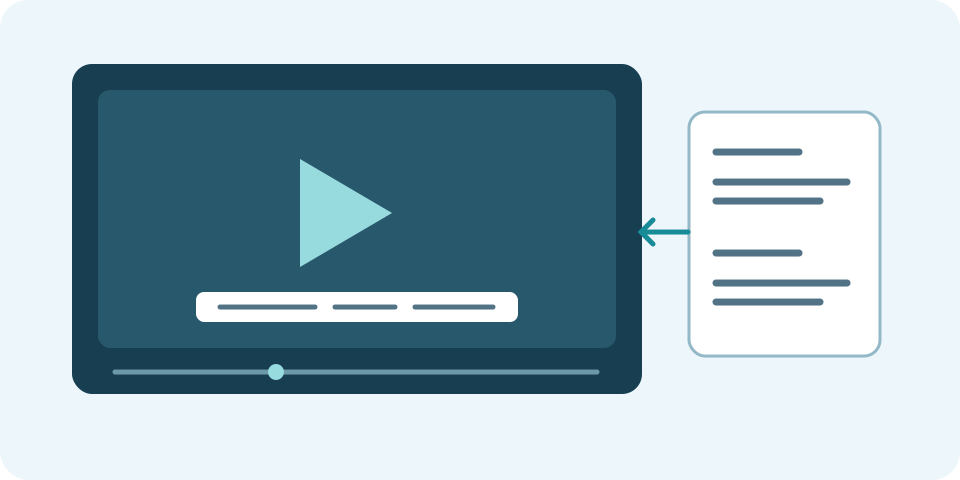
Load an external SRT subtitle file in VLC, check synchronization and characters, and fix missing or misaligned subtitles without changing your video.
Transcription Timestamps and Timecodes: A Practical Guide
Understand subtitle timestamps, SRT and VTT time formats, why automatic times drift, and how to check cue boundaries before publishing captions.
Translate SRT and VTT Files Without Breaking the Timing
Translate subtitle cue text while keeping the original timestamps, then check expansion, cue structure and playback before publishing.
Subtitles Out of Sync: Diagnose Offset, Drift and Player Problems
Find out whether subtitles are early, late, drifting or using the wrong file, then choose between a safe offset, a retime or a fresh export.